What’s the software program growth life cycle?
The software program growth life cycle, also referred to as SDLC or techniques growth life cycle, is a clearly outlined and extremely organised methodical course of for creating and refining software program.
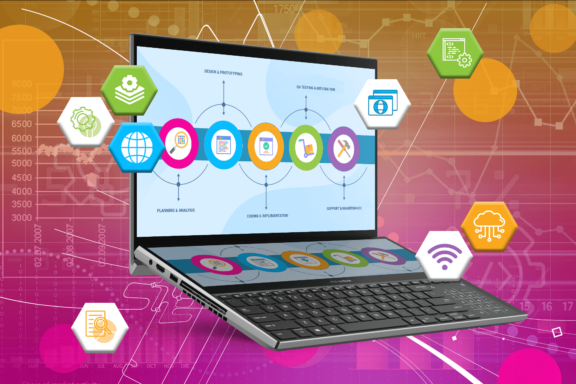
The software program growth life cycle is mostly described within the following seven phases, though there are a number of variations of the software program growth life cycle which mix a few of the steps:
- Planning
- Necessities
- Design and prototyping
- Growth
- Testing
- Deployment
- Operations and upkeep
How the Software program Growth Life Cycle Works
The software program growth life cycle works by offering a structured framework encompassing each activity vital for the event of software program for growth groups to comply with.
This helps to scale back time and useful resource waste while guaranteeing that the undertaking stays environment friendly and stays on observe.
What’s the significance of the software program growth life cycle?
The software program growth life cycle is essential for constructing software program and guaranteeing the standard and correctness of the software program constructed. It additionally helps to offer a framework for the standard set of actions and deliverables.
In case you are contemplating investing in an embedded software program answer or cellular app that gives an distinctive consumer expertise, then you’ll want to know the phases which can be concerned in constructing such a specialist product.
This text will define the software program growth framework and canopy an in depth plan for constructing, deploying and sustaining the software program in addition to a few of the frequent fashions utilising the SDLC.
Can software program be developed with out the software program growth life cycle?
Deviating from an SDLC methodology can lead to a product that doesn’t meet the wants of customers or match the standard requirements anticipated inside the trade so creating software program on this approach with out the SDLC will not be suggested.
Nevertheless, in some instances corresponding to in case you’re creating a small undertaking at residence in your personal use, a proper SDLC course of will not be at all times vital, though your actions are nonetheless prone to informally comply with an SDLC.
For skilled, giant tasks, it’s far too dangerous to try software program growth with out the SDLC and doing this could possible end result within the final failure of the undertaking – losing time, funds and assets.
The 5 Software program Growth Life Cycle Levels
The 5 software program growth life cycle phases embrace planning and evaluation, design and prototyping, coding and implementation, QA testing and integration and assist and upkeep.
Beneath, we discover the goals of every stage, what’s required and why every one is necessary.
Planning and Evaluation
The primary and most necessary stage of the SDLC is to assemble all related info with reference to buyer expectations, objectives and targets together with an in depth breakdown of what the client needs to realize long-term.
At this stage, the undertaking supervisor will arrange a gathering with you to debate these necessities corresponding to what the aim of the product is and who would be the end-user. The undertaking supervisor may also aid you to determine any potential gaps out there.
The assembly may also current an opportunity to debate the alternatives and dangers of pursuing the undertaking. Clear structured documentation will assist the event group to analyse the technical and economical elements impacting the applying growth course of. Involvement from the event group will assist calculate the ROI and decide the general undertaking price and timescale for completion.
Instance: A buyer requires an software that entails a monitoring system to observe and gather information. On this case, the said necessities will should be clear about what information the system might want to gather, the way it will gather it and what the top outcomes should be.
Design and Prototyping
Through the design part, the conceptualisation of the answer is created. This determines whether or not the software program structure is assembly the precise undertaking necessities.
Customized, tailor-made software program design by software program architects helps builders set definitive workflows and requirements. This stage of the method can be constructed utilizing the ultimate prototype and mockups, to verify the performance and value of the answer and potential software program growth instruments that can be utilized for future growth and processes to grasp the enterprise wants and targets.
There are two varieties of design paperwork developed within the design and prototyping part; high-level design and low-level design.
Excessive-level design will embrace a short description and an overview in regards to the performance of every module, interface relationship and dependencies, database tables and full structure diagrams.
Low-level design will assess the practical logic of the modules, database tables, full element of the interface, deal with all varieties of dependency points, itemizing of error messages and inputs and outputs for every module.
Coding and Implementation
The implementation part, additionally outlined as the event and coding part, is about writing code and changing all of the design documentation into precise software program, which is essentially the most time-intensive a part of the event course of.
Your complete system can be constructed utilizing the chosen programming language corresponding to Javascript and all duties can be divided into items or modules and assigned to numerous builders throughout the event group.
The newly constructed and examined software is then moved to the software program testing and integration part to deploy any fast modifications. The software program engineering group has to make it possible for the code meets all software program necessities and specs.
QA Testing and Integration
The software program engineering group will then got down to deploy the software program as soon as full into the testing surroundings. That is the place the standard assurance testing group will set out and use a complete vary of frameworks alongside unit testing to conduct a collection of checks.
The software program high quality assurance testing part is an engineering course of that ensures high quality with all checks carried out in a strong testing surroundings, allocating time accordingly to every course of, prioritising bug fixes and choosing the discharge standards fastidiously.
These checks embrace performance testing, techniques integration and consumer acceptance testing to make sure the code is clear and the enterprise objectives have been met. As soon as the system has been validated and is bug-free, the system can be prepared for launch.
Help and Upkeep
Through the ultimate phases of the product growth part, there would be the alternative for ongoing upkeep and assist post-launch. As soon as the client begins utilizing the deployed system, any points that will happen can be fastened. Upkeep assist will be one of many following, together with bug fixing, system upgrades or software program enhancements.
There could possibly be a number of causes {that a} software program system may have upkeep together with bettering the design options for higher usability or implementing enhancements or accommodating new packages in order that totally different {hardware}, software program, system options and telecommunications amenities can be utilized.
Software program Growth Life Cycle Fashions
Within the software program trade, the preferred software program growth life cycle fashions are the:
- Waterfall SDLC mannequin
- V-shaped SDLC mannequin
- Iterative SDLC mannequin
- Spiral SDLC mannequin
- Massive Bang SDLC mannequin
- Agile SDLC mannequin
- Scrum SDLC Mannequin
- XP SDLC Mannequin
- RAD SDLC Mannequin
Be taught extra in regards to the widespread fashions beneath.
Waterfall SDLC Mannequin
The waterfall mannequin, also referred to as the linear-sequential life cycle mannequin, is a sequential software program growth course of during which the steps stream steadily downwards (like a cascading waterfall) via the assorted phases within the course of.
The output of the primary stage turns into the enter for the next part, which is known as an incremental method.
A number of planning and documentation is concerned within the waterfall mannequin as each stage is mapped out intimately.
This mannequin is primarily utilized by authorities, manufacturing and development industries.
Though there are numerous modified waterfall fashions, the unique waterfall mannequin is claimed to have concerned:
- System and software program necessities
- Evaluation
- Design
- Coding
- Testing
- Operations
The waterfall SDLC is greatest suited to long-term tasks corresponding to these lasting longer than 12 months.
Waterfall SDLC Mannequin Execs
- It entails a lot of detailed planning, making it easy for every individual within the group to know what must be performed and when.
- It additionally ensures that deadlines are lifelike and will be met as each step has been deliberate meticulously.
- It’s straightforward to handle the duties concerned, particularly for bigger groups or tasks.
Waterfall SDLC Mannequin Cons
- Any errors or missed steps can turn out to be costly and time-consuming to repair as a result of the mannequin is predicated on the concept the whole lot is accomplished in sequential order.
- It takes some time for working software program to be produced – which might trigger some preliminary concern amongst purchasers or stakeholders.
- It’s tough to measure the group’s progress as working software program isn’t accessible to have a look at till the later phases of the undertaking.
- A deep understanding of buyer necessities is required in order that growth groups don’t waste time and assets constructing a product that customers don’t need.
- This mannequin isn’t appropriate for smaller groups and growth tasks as an excessive amount of time could be wasted on analysis in relation to the size of the general activity.
V-Formed SDLC Mannequin
The v-shaped SDLC mannequin, also referred to as the verification and validation mannequin, is a sequential software program growth course of during which the steps stream in a v-shape, down in a linear style after which bent up after the coding stage.
Just like the waterfall mannequin, the event group solely works on one stage at a time earlier than shifting onto the following one within the sequence. Nevertheless, the primary distinction between the waterfall mannequin and the v-shaped mannequin is that testing is included in each step.
The v-shaped mannequin is primarily used within the medical gadget trade. Though there are numerous variations of the v-shaped mannequin, the unique model is claimed to have concerned:
- Requirement evaluation
- System design
- Structure design
- Module design
- Implementation/coding
- Unit testing
- Integration testing
- System testing
- Person acceptance testing (UAT)
The v-shaped SDLC mannequin is best suited to growth groups engaged on giant tasks that even have a deep understanding of any in-house growth processes and prioritise testing alongside the way in which.
V-Formed SDLC Mannequin Execs
- Just like the waterfall mannequin, the v-shaped SDLC mannequin entails an in depth starting stage which makes it simpler to satisfy deadlines as particular activity directions are outlined at first.
- The main focus stays on one activity at a time – which implies the whole lot is extra prone to be accomplished to a excessive customary on account of a scarcity of distractions and avoidable disruptions.
- This mannequin is properly suited to giant growth groups.
V-Formed SDLC Mannequin Cons
- Sadly, errors or missed steps can turn out to be costly and time-consuming to repair because the mannequin is designed for every stage to be accomplished in sequence.
- Growth groups require a deep understanding of the product and what customers want as modifications can’t be made as soon as a stage is full.
- As a result of nature of the mannequin, end-users or purchasers could develop involved by how lengthy it takes to supply a working or tangible product.
- It’s unsuitable for small groups engaged on small tasks.
Iterative SDLC Mannequin
The iterative SDLC mannequin is a round growth mannequin primarily based on the idea of incremental growth, which signifies that growth initially focuses on an preliminary simplified model (MVP function units) after which progressively turns into extra complicated because the function units broaden till the complete product is developed – requiring little preliminary planning within the early phases.
This course of known as iterative incremental growth as a result of it’s mentioned to be accomplished via repeated cycles (iterative) of small parts (incremental) and consists of the next steps:
- Preliminary planning
- Planning
- Necessities
- Evaluation and design
- Implementation
- Testing
- Analysis
- The whole lot once more..
- The whole lot once more..
- The whole lot once more till it’s prepared…
- Deployment
Iterative SDLC Mannequin Execs
- Planning is much less thorough and time-consuming than within the waterfall and v-shaped mannequin which might enhance time and price efficiencies.
- Small modifications will be made to the product all through the development of growth due to this.
- Shoppers and stakeholders can see working software program instantly and can constantly see the enhancements the event group makes which builds confidence.
- The group’s progress will be simply managed.
- A couple of iteration will be labored on on the identical time.
Iterative SDLC Mannequin Cons
- Small modifications will be made however any variations require loads of further administration effort, which might lower total efficiencies.
- Due to the restricted preliminary plans and documentation, there’s no clear concept of what precisely the ultimate product must be like – the product could evolve into one thing fully totally different to what was initially considered.
- Structure bugs and design faults could happen all through the event course of on account of the shortage of formal planning and documentation.
Spiral SDLC Mannequin
The spiral mannequin, also referred to as the meta-model, subsumes different SDLC fashions together with the waterfall and iterative fashions and is thought to be risk-averse due to the way in which the spiral mannequin handles dangers after software program growth tasks have begun.
Within the spiral mannequin, software program growth is accomplished by repeatedly passing via phases of iteration referred to as spirals, that are:
- Plan targets or determine different options
- Carry out danger evaluation
- Develop and check subsequent degree of product
- Overview, consider and plan the following part
Just like the iterative SDLC mannequin, the spiral SDLC mannequin permits testing at each stage of growth. Suggestions can also be collected at each step so the product can adapt intently to any modifications out there’s wants.
Spiral SDLC Mannequin Execs
- Any further options and parts will be integrated into the product all through the event course of and slight modifications don’t pose a big inconvenience.
- Duties will be damaged down and prioritised primarily based on the options the viewers or end-users are most desirous to see.
- Continuous enchancment will be achieved by way of the suggestions collected from every deployment stage.
- Working software program will be seen early on within the life cycle which demonstrates worth to each end-users and purchasers.
Spiral SDLC Mannequin Cons
The spiral SDLC mannequin is unquestionably one of many extra complicated methodologies and strict administration is required to forestall spirals from persevering with indefinitely.
Additionally it is unsuitable for smaller groups and might trigger tasks to turn out to be costly on account of all the repeated testing and deployment phases.
Massive Bang SDLC Mannequin
The massive bang mannequin is an SDLC mannequin that doesn’t comply with a selected set of processes or planning and could be very excessive danger as a result of it adopts a just-do-it method with out evaluation or clear necessities.
There is no such thing as a formal planning or in depth analysis concerned and it is just actually appropriate for very small groups with very small tasks.
Massive Bang SDLC Mannequin Execs
- It’s the easiest mannequin round, there’s zero planning concerned which makes it excellent for small groups or advert hoc facet tasks, permitting excessive ranges of flexibility.
Massive Bang SDLC Mannequin Cons
- It’s extremely excessive danger. With no plans or formal necessities in place, you possibly can’t think about what the top end result can be like which makes it fully unsuitable for big or complicated tasks with many stakeholders.
Agile SDLC Mannequin
The agile SDLC mannequin is a course of during which growth is accomplished in small, fast segments or increments. Basically, it’s a mixture of interactive and incremental approaches centered on being versatile and adaptable.
The agile mannequin is without doubt one of the most generally used fashions within the know-how trade as a result of it provides groups the pliability of measuring progress frequently, adapting to altering manufacturing environments and desires of customers, and receiving suggestions in real-time by releasing working software program and up to date function units extra continuously and getting suggestions from the market.
The agile SDLC mannequin is predicated on 4 central themes and 12 agile rules that are outlined within the 2001 Manifesto for Agile Software program Growth.
The 4 central themes of agile software program growth are:
- People and interactions over processes and instruments
- Working software program over complete documentation
- Buyer collaboration over contract negotiation
- Responding to vary over following a plan
The 12 Agile Rules are:
- Buyer satisfaction is the best precedence
- Welcome requirement modifications, even late in growth
- Ship working software program continuously
- Enterprise individuals and builders should collaborate each day
- Construct tasks round motivated people
- Face-to-face dialog is essentially the most environment friendly and efficient strategy to convey info inside a growth group
- Working software program is the first measure of progress
- Agile processes promote sustainable growth
- Agility is enhanced by steady consideration to technical excellence and good design
- Simplicity – the artwork of maximising the quantity of labor not performed – is important
- The most effective architectures, necessities and designs come from self-organising groups
- The group displays on tips on how to turn out to be simpler then adjusts its behaviour accordingly at common intervals
The agile mannequin works like this:
- Brainstorm and necessities evaluation
- Design documentation and prototyping
- Growth iterations, demo and suggestions
- High quality assurance, testing, iterations, demo and suggestions
- Growth, manufacturing and technical assist
- Repeat
OR as an alternative…
- Plan
- Design
- Develop
- Take a look at
- Launch
- Suggestions
- Repeat
Agile SDLC Mannequin Execs
- The product is consistently evolving with suggestions, guaranteeing that it’s at all times assembly the market’s most present necessities.
- Change is actively embraced and so strict, detailed, time-consuming paperwork is saved to an absolute minimal.
- It’s best suited to smaller tasks and ensures that each group member is at all times on the identical web page and saved on top of things on account of frequent communication. Groups can work collectively way more effectively due to this too.
Agile SDLC Mannequin Cons
- There’s no clear concept of what the top product ought to appear like because it’s continually altering and evolving. Due to this, growth groups should be extremely adaptable and expert for the agile mannequin to work properly.
- It may be tough to pin down a stable end date due to the fixed change and lack of inflexible documentation. This may turn out to be a priority for purchasers or stakeholders.
Scrum SDLC Mannequin
The Scrum SDLC mannequin is a subset of the agile SDLC mannequin and adheres to the identical rules.
The scrum SDLC mannequin works by splitting growth up into 2-4 week-long sprints that the group spends working solely on creating working software program.
On the finish of every dash, the software program the group works on is deployed in order that client suggestions will be obtained.
The three major roles concerned within the scrum mannequin are Product Proprietor, Scrum Grasp and Scrum Workforce.
The Product Proprietor is accountable for speaking with stakeholders and creating the product backlog which lists each function the event group must create.
The Scrum Grasp is accountable for breaking the options within the product backlog down into smaller duties to be accomplished in every dash to create the scrum backlog – every activity known as a consumer story.
The Scrum Workforce is accountable for the event of the particular product – every member is required to be dedicated, extremely skilled and accountable for their very own duties. The Scrum Workforce comes collectively to speak at brief each day conferences so that everybody will be up to date on progress and any challenges that come up will be mentioned and overcome.
After each dash, the complete group holds a scrum overview assembly the place earlier work is mentioned and alternatives for enchancment are recognized.
The scrum SDLC mannequin works greatest inside small groups of 10 or much less in order that communication can stay environment friendly but concise.
Scrum SDLC Mannequin Execs
- It permits for nice flexibility, groups can adapt simply to vary while nonetheless sustaining strict processes.
- Workforce members are held extremely accountable and everyone seems to be accountable for producing high-quality work.
- The each day conferences required foster clear and efficient communication which aids total effectivity.
Scrum SDLC Mannequin Cons
- As a subset of the agile methodology, it doesn’t can help you have a transparent concept of what the ultimate product will appear like.
- It’s unsuitable for groups that aren’t skilled or versatile sufficient to react shortly to modifications and choose up new abilities/applied sciences effectively.
- It may be tough to make exact time or price estimates because the product is consistently adapting.
XP (Excessive Programming) SDLC Mannequin
The intense programming SDLC mannequin is a subset of the agile SDLC mannequin however is predicated on these 5 parts:
- Simplicity: growth groups ought to method options and performance within the easiest way doable (not in contrast to the MVP stage in startup growth)
- Workforce communication: each day face-to-face communication is essential
- Suggestions: consumer suggestions is collated, assessed and acted on constantly
- Braveness: growth groups should be brave sufficient to simply accept and roll with new modifications after they happen
- Respect: every member of the event group must have respect for one another and type a powerful sufficient bond that every individual is extra devoted to the event of essentially the most profitable product doable than the final
The XP SDLC mannequin is greatest suited to extremely skilled, small groups of not more than 10 the place shopper specs are scarce.
XP SDLC Mannequin Execs
- Working software program is consistently being deployed which pleases each customers and purchasers.
- Adjustments, changes and variations are actively inspired and embraced. The price of making these modifications can also be a lot decrease compared to the waterfall SDLC mannequin.
XP SDLC Mannequin Cons
- It requires an skilled, adaptable growth group to supply good outcomes.
- The shortage of formal documentation signifies that not solely is there no clear concept of what the top product must be like, however that frequent communication is totally important.
RAD (Fast Utility Growth) SDLC Mannequin
The Fast Utility Growth SDLC mannequin is sort of just like the iterative SDLC mannequin and is made up of various iterations which can be known as prototypes – every one forming a special operate of the general product.
Every prototype is deployed individually, that means suggestions on every one will be collected all through the event course of.
In addition to this, every prototype will be reused on future tasks, saving time, cash and assets.
Just like the agile SDLC mannequin, the RAD SDLC mannequin encourages growth groups to embrace change and limits prolonged documentation necessities.
The 5 phases of the RAD SDLC are:
- Enterprise modelling
- Information modelling
- Course of modelling
- Coding
- Testing
Every prototype should undergo all 5 phases.
RAD SDLC Mannequin Execs
- Every prototype is reusable which is extremely price and time-efficient.
- The fixed supply of prototypes retains clients engaged and happy with the worth of the software program.
- Growth groups can keep in tune with the market due to the suggestions collected after every prototype launch.
- It’s best suited to groups of round eight or much less and permits the group’s total progress to simply be monitored.
RAD SDLC Mannequin Cons
- Growth groups have to be dedicated to the product and extremely expert to finish the fixed modifications.
- It solely applies to tasks that may be cut up up into separate prototypes.
What kind of method is greatest in your undertaking?
In brief, the software program growth life cycle is a structured course of that may range from firm to firm aiming to ship the highest quality merchandise. It may be formed or adjusted to the wants of the client or in accordance with the wants of the undertaking that’s being labored on.








![8 Greatest XML Viewer / XML File Reader [2023 Guide]](https://softwahub.com/wp-content/uploads/2023/07/dfb8a28169dc0cbb9a5024f97c562e26.jpg)